
Choosing a Therapist
How to Choose a Therapist in Los Angeles
A Los Angeles directory search returns more therapists than anyone can compare, and the profiles read alike: a warm paragraph, a long list of specialties, a headshot. This guide covers what actually separates a good fit from a poor one, in the order you will meet it: what to decide before you search, how to read a profile and check a license, how to match the approach to the problem, and what to ask in a free consultation.
Life Threads Therapy® appears as a worked example, because a license check or a fee question is easier to show on a real practice than in the abstract. The steps work for any therapist in California.
Book a free consultationBefore You Search
Three decisions before you open a directory save most of the scrolling. First, in person or online. A therapist licensed in California can see you by secure video from anywhere in the state, which widens the field; an office narrows it to a commute you will keep on a bad week, not just a good one. Some people work better in a room, some talk more freely from their own couch.
Second, what you want help with, said the way you would say it out loud: I cannot stop worrying, we have the same fight every week, something happened years ago and it is still here. One plain sentence is enough to match against what a therapist says they treat, and it is what you will say on the call.
Third, budget, and whether you will use out-of-network benefits. Out of network, the real cost is what is left after your plan reimburses its share. If you have a PPO, call the number on your card and ask: do I have out-of-network mental health benefits, what is the out-of-network deductible, and what percentage is covered once it is met. HSA and FSA funds can usually be used for therapy.
The worked example: Life Threads Therapy® sees people in person in West Los Angeles and by video anywhere in California. Every session is a flat $200, the practice is out of network and checks your benefits before the first session, and the reimbursement estimator shows what a session is likely to cost you once your plan pays its share.
Reading a Profile and Checking the License
A profile is worth reading for three things: the license, what the therapist says they treat, and how they say it. A list of twenty specialties tells you less than three described plainly. Look for the sentence you wrote in step one, said by someone who sounds like they have sat with it.
Check the license before you call. Every California license has a number, and the Department of Consumer Affairs search at search.dca.ca.gov shows in a minute whether it is current and whether any discipline is on record. LMFTs and LPCCs are licensed by the Board of Behavioral Sciences, psychologists by the Board of Psychology. A profile that says associate means pre-licensed and supervised: not disqualifying, but worth knowing.
The letters, briefly. An LMFT (licensed marriage and family therapist) and an LPCC (licensed professional clinical counselor) both hold a master's degree and a state license to treat individuals; the LMFT was trained with more emphasis on couples and families, the LPCC on counseling. A psychologist holds a doctorate, and is who you need for formal psychological testing. For talk therapy, the letters matter less than the training and the fit.
Trained and certified are not the same word. Trained in EMDR means the therapist completed the training; certified means a certifying body reviewed their hours and consultation afterward. Certification is a higher bar; training plus ongoing consultation is how most therapists practice a method well. Ask which it is. At Life Threads, Bree Anthony, MA, LMFT (#154730) is EMDR trained, with basic training plus consultation; Lyndsay Mclaren, LPCC (#11036) is DBT certified and EMDR trained. Both numbers are the ones to type into the DCA search.
Matching the Approach to the Problem
Once the problem is named, the approach matters, more so the more specific the problem is. Five you will see on Los Angeles profiles. EMDR therapy is for memories that still fire in the body, a structured protocol that reprocesses them with bilateral stimulation. IFS therapy is for inner conflict, the parts of you pulling in different directions and the critic that runs the meeting. CBT therapy is for the loop between thoughts, feelings and behavior, and is often used for anxiety, panic and OCD-shaped patterns. DBT therapy is for emotions that arrive at full volume and the behavior that follows, taught as skills. Psychodynamic therapy is for patterns that repeat across relationships and years, and for understanding where they come from.
Most experienced therapists use more than one; what you want to hear is which they would start with for your problem, and why. Be equally wary of a profile that lists every method and one that lists only one. At Life Threads, Bree draws on EMDR, IFS-informed, attachment-based, psychodynamic, ACT and CBT work, and Lyndsay on DBT and EMDR; which comes first depends on what you bring to the consultation.
What the Free Consultation Is For
Most therapists offer a short free call before the first session. It is not a mini-session and it is not a test you can fail. It is for two things: whether this person works with your problem, and whether you can imagine talking to them every week. You will learn more from how they answer than from what they say.
Five questions worth asking. Have you worked with this before, and what did that work look like? Which approach would you start with for me, and why? What does a first session look like, and how will we know it is helping? What do you charge, and do you help with out-of-network claims? If it is not a fit after a few sessions, how do you handle that? A therapist who answers the last one easily is one you can leave, which is a good reason to stay.
At Life Threads the consultation is a free 20 minutes. Before the first session the practice checks your out-of-network benefits, and afterward it files the claims for you, so the reimbursement check comes to you. The FAQ page covers the rest of what people ask before booking.
Getting Started
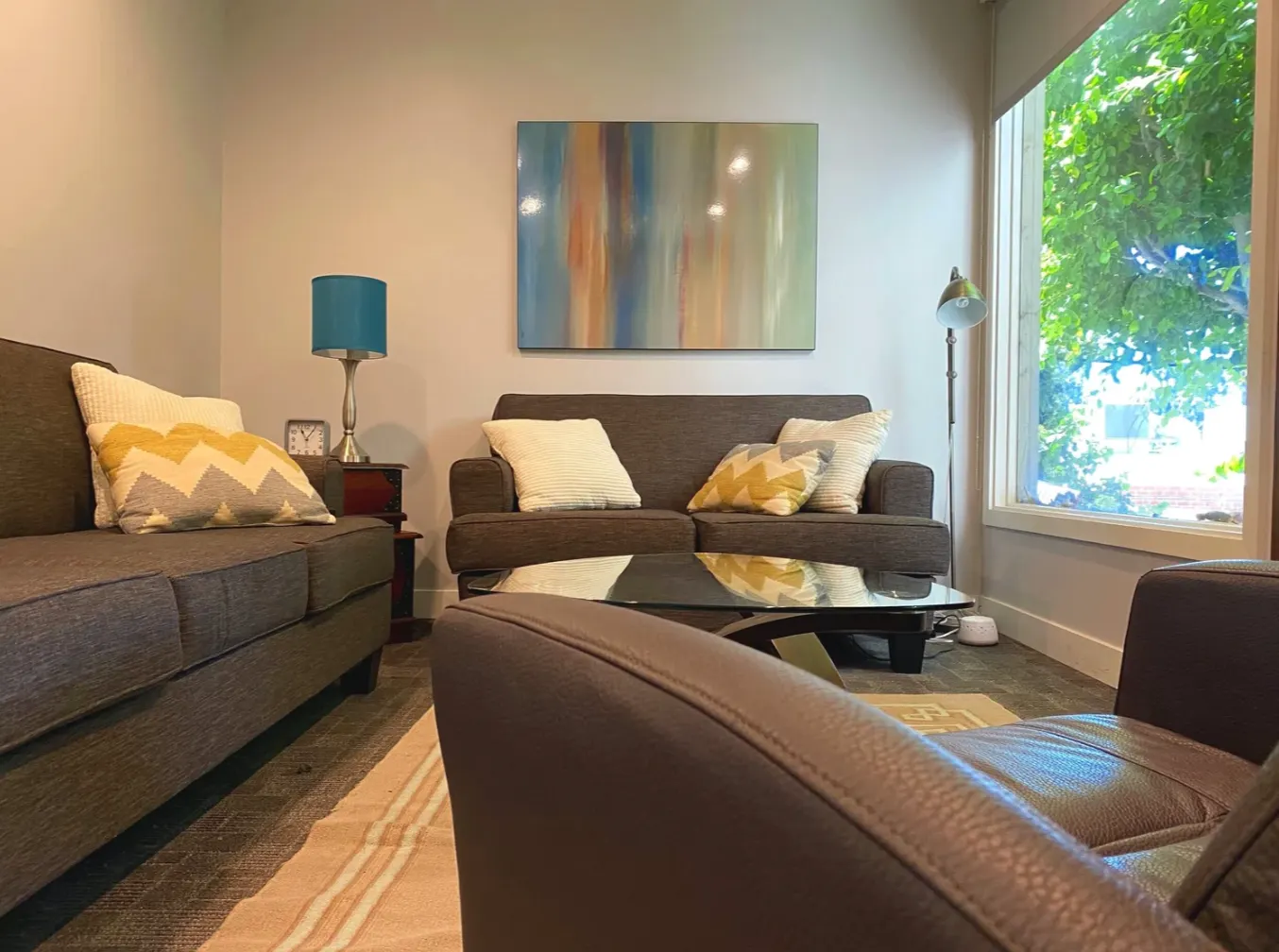
If you would like to run the steps above on us, start with a free 20-minute consultation: book online, or send a question through the contact page first if that feels easier. Sessions are in person at our West Los Angeles office, between Santa Monica and Culver City, or by secure video anywhere in California. If we are not the right fit, we will say so and help you find who is.
Choosing a Therapist: Questions
The questions people ask while they are still comparing profiles.
Start With a Conversation
Book a free 20-minute consultation and put the questions above to us. No commitment required.
Book a free consultationIf you are experiencing a mental health emergency, please contact the 988 Suicide and Crisis Lifeline by calling or texting 988, or go to your nearest emergency room. The information on this page is for educational purposes and does not constitute clinical advice or a therapeutic relationship.